


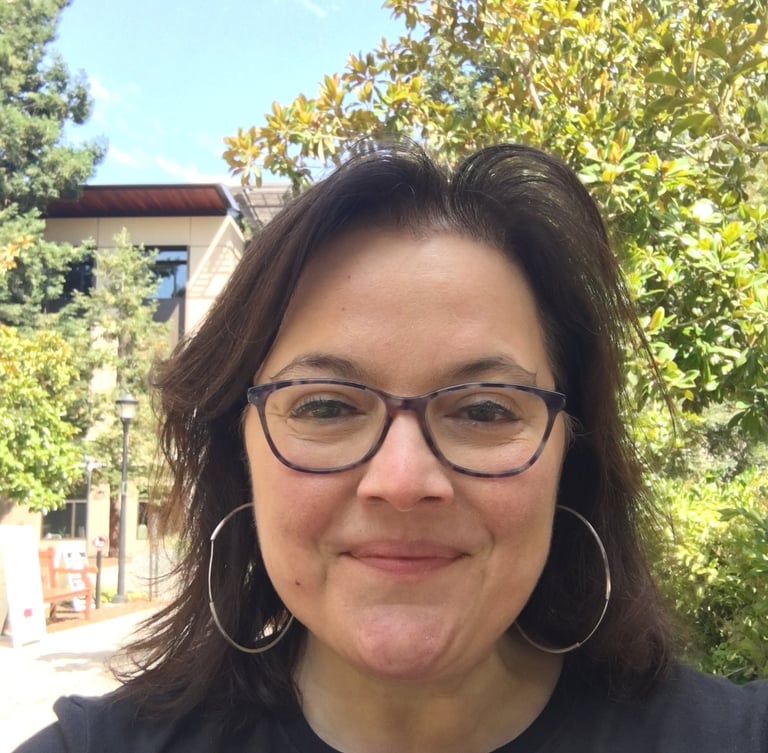
As an Amherst Writers & Artist (AWA) certified facilitator fluent in English and Spanish, Arlene Rodríguez values the rich family and community stories that have shaped her understanding of storytelling.
In addition to her experience as a teacher and writer, she brings:
Over 10 years as a participant in AWA-led workshops when she lived in Western Mass.
Experience reading her work throughout Massachusetts, including at Smith College as a part of Gallery of Readers.
An earned doctorate in literature from the University of Massachusetts Amherst.
National publications and presentations on initiatives to improve student success for all students in community colleges.
About the facilitator
After 34 years in higher education, she continues to advocate for student success and support, while now engaging herself and supporting writers of all levels with exploring their own voices.
For information about workshop schedule, go to the Workshops page.

About the workshops
All our workshops follow the Amherst Writers & Artists Method.
AWA believes that everyone is a writer and deserves a safe space to explore and develop their craft. Each workshop embeds the following AWA five essential affirmations.
The Five Essential Affirmations:
1. Everyone has a unique voice.
2. All are born with creative genius.
3. Writing is a universal art, accessible to all, regardless of background.
4. Craft teaching should not compromise a writer's original voice or self-esteem.
5. A writer is defined by their writing.
We maintain a non-hierarchical spirit regarding the writing. The facilitator is not the “expert” and no one’s writing is treated as more or less important than anyone else’s.
Confidentiality about what is written in the workshop is maintained at all times, and the privacy of the writer is protected. Feedback is offered to the writing; we don’t assume any part of the story comes from the life of the person who did the writing. We also maintain confidentiality by not talking about any work we’ve heard in the group to anyone outside of the workshop space.
In our workshops, we are asked to listen differently than we usually do in our lives. We are asked to enter into the universe that the writer has created. We are asked to leave behind our own experiences and expectations. We are asked to listen to how the story or the poem is told. We listen for and notice what works. We listen for and notice the craft choices a writer has made that help to create success in the writing.
No criticism, suggestion, or question is directed toward the writer in response to first-draft, just-written work. A thorough critique is offere d only when the writer asks for it, and only when he or she has distributed work in manuscript form. When work has been offered in manuscript form, critiques are balanced; there is as much affirmation as suggestion for change.
The teaching of craft is taken seriously, and is conducted through exercises that invite experimentation and growth.
The leader writes along with the participants, and reads that work aloud as well. This practice is absolutely necessary, for only in this way is there equality of risk-taking and mutuality of trust.
A Summary of the Six Essential Practices
Stay up to date about upcoming workshops or reach out if you have questions.
Taken from: https://amherstwriters.org/what-to-expect/
© 2026. All rights reserved. Arlene Rodriguez Writing Workshops